FAQ
Broadwall directional coupler questions
What is the standard frequency range?
The published standard product line covers 1.13–40 GHz, corresponding to WR650 through WR28. Additional sizes or special configurations are available for review on request.
What coupling values are available?
The product datasheet lists a nominal coupling range of 3–40 dB. The website identifies common values including 3, 6, 10, 20, 30 and 40 dB. Confirm the required value and operating band when requesting a model.
What is the difference between WC, WUC and WDXC configurations?
WC identifies single-arm broadwall configurations in the datasheet. WUC is used for four-port secondary-line arrangements. WDXC identifies dual-arm configurations for separate forward and reverse sampling.
Are waveguide and coaxial coupled outputs available?
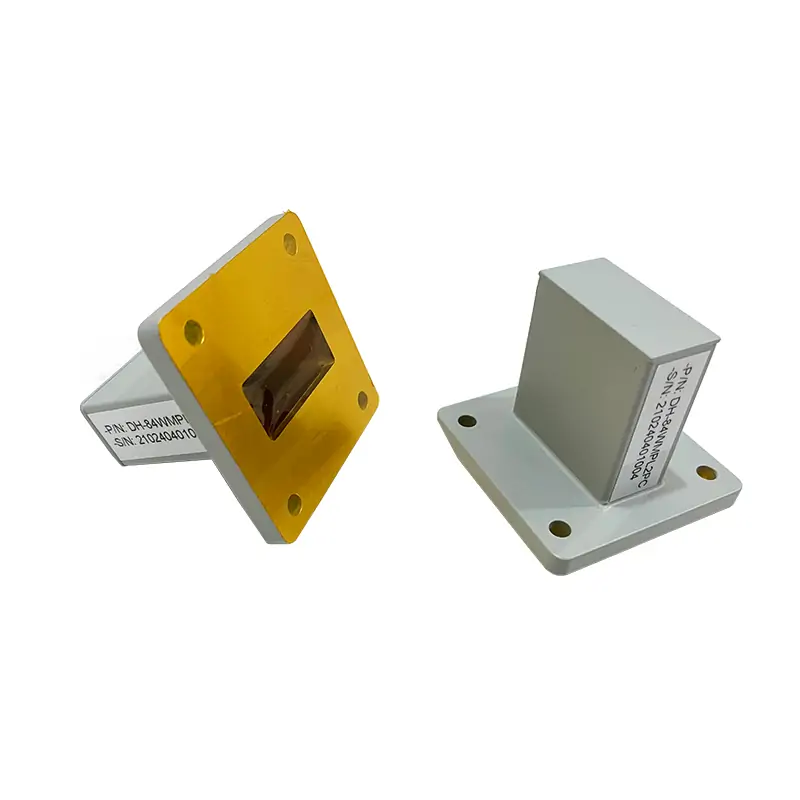
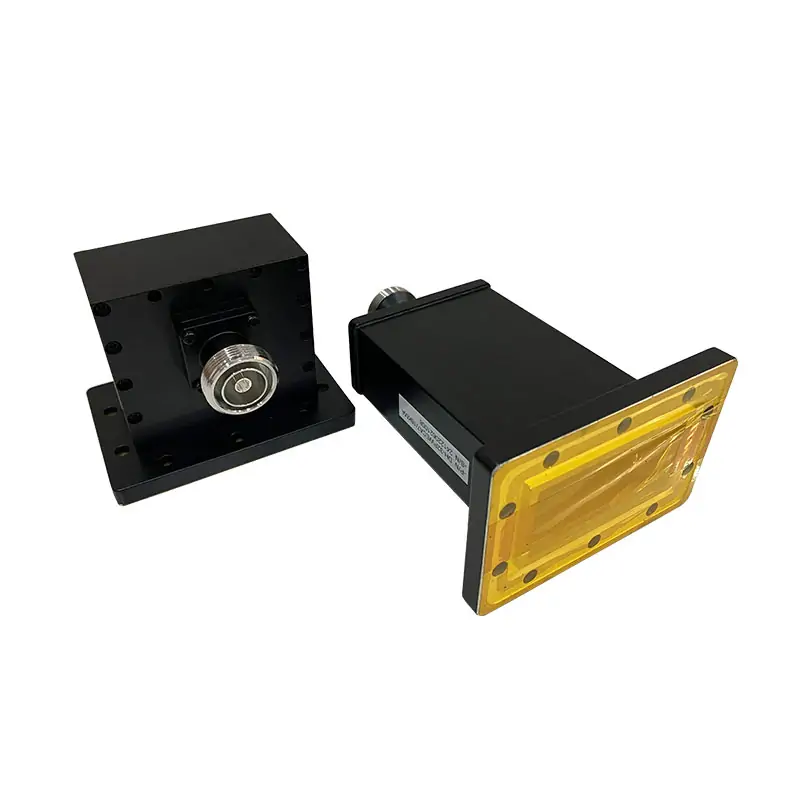
Yes. The six published styles include waveguide secondary ports and coaxial secondary ports. Listed coaxial interfaces include N-Type, SMA and 2.92 mm K-type according to waveguide band and configuration.
What directivity should be used for system calculations?
Use the value for the selected port style and model. Waveguide-secondary and single-coax configurations list up to 20–38 dB minimum, while the two-coax four-port Style 4 lists 20–25 dB minimum.
What coupling accuracy and frequency sensitivity are published?
The datasheet separately states nominal coupling accuracy of ±0.7 dB and frequency sensitivity of ±1 dB. These are not a complete power-measurement uncertainty specification. Include sensor calibration, cable loss, mismatch and directivity when setting the measurement acceptance requirement.
Which materials and finishes are available?
The specification tables list aluminum and copper. The product page also references oxygen-free hard copper or copper alloy. The standard ordering note states corrosion protection plus a black top coat.
What information should be included with an RFQ?
Provide frequency range, waveguide size, required coupling, single- or dual-direction monitoring, coupled-port interface, connector and flange types, material, mechanical drawing or envelope, quantity and any environmental or documentation requirements.