- FR1: The Sub6G frequency band is the main frequency band of 5G and is a low-frequency band,the frequency below 3GHz is Sub3G, and the remaining frequency bands are called C-bands.
- FR2: Millimeter wave is an extended frequency band of 5G.
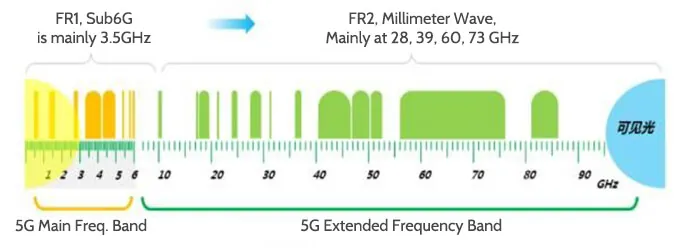
- The frequency range of FR1 is 450MHz to 6GHz, also called Sub6G (below 6 GHz).
- The frequency range of FR2 is from 24GHz to 52GHz. Most of the electromagnetic wave wavelengths in this spectrum are in the millimeter level, so it is also called mmWave.
- The advantages of FR1: low frequency, strong diffraction ability, good coverage effect, it is the current main spectrum of 5G. FR1 is mainly used as a basic coverage band, and it supports a maximum bandwidth of 100Mbps. The part below 3GHz includes the spectrum of 2G, 3G, and 4G in use on the existing network. In the initial stage of network construction, this part of the resources can be used to achieve rapid deployment of 5G networks.
- The advantages of FR2: it has a large bandwidth, clean spectrum, and low interference, and it is used as the subsequent extended frequency of 5G. FR2 is mainly used as a capacity supplementary frequency band, supporting a maximum bandwidth of 400Mbps. Many high-speed applications in the future will be based on this segment of frequency spectrum. The peak rate of 5G up to 20Gbps is also based on FR2’s ultra-high bandwidth.
- enhanced mobile broadband,
- ultra-reliable low-latency,
- massive machine-type communications,