
Space Qualified Waveguide Components
Custom Waveguide Assemblies
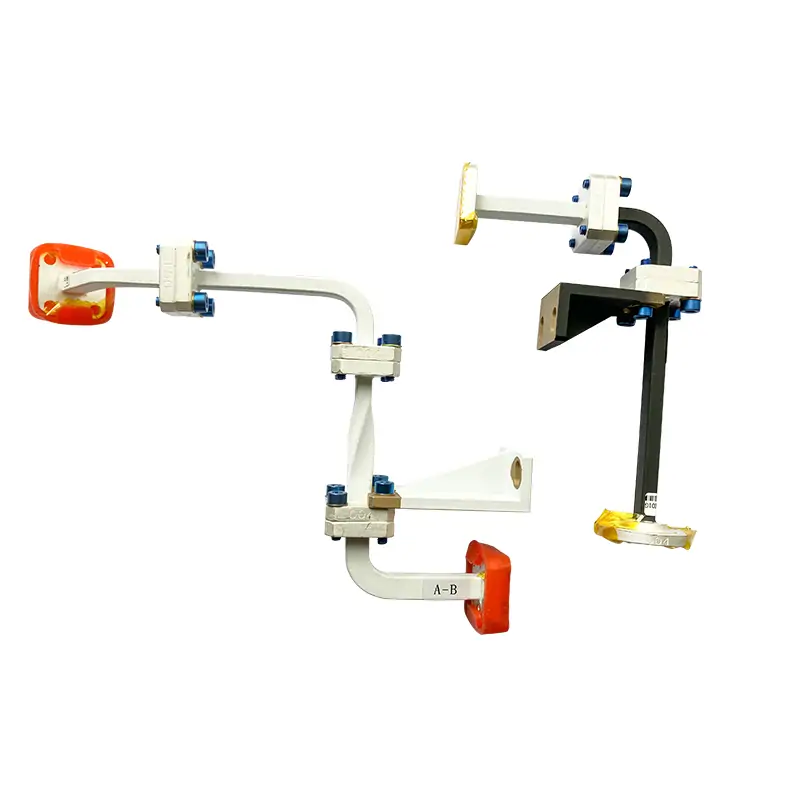
Dolph Microwave supplies custom waveguide assemblies for aerospace RF systems and laboratory integration. The configuration can include straights, bends, twists and waveguide-to-coaxial transitions matched to the assembly drawing.
Define whether the hardware is for a ground station, thermal-vacuum test setup or flight installation. Each use has a different acceptance scope. Flight qualification must be confirmed for the specific design, materials, process and mission requirements.

Advanced Manufacturing & Materials
Specify the waveguide size, flange interfaces, routing, mounting points and mass limit before the mechanical design is released. Material, wall thickness, finish and joining method need to satisfy both the RF loss budget and the structural requirements.
For a custom assembly, provide the maximum envelope and flange orientation in a drawing or 3D model. Confirm the final material and finish on the approved manufacturing drawing rather than relying on a generic product description.
Product Features
Materials and vacuum compatibility. Identify coatings, adhesives, lubricants and other nonmetallic materials in the assembly. Request material identification, processing conditions and applicable outgassing evidence.
NASA’s outgassing database uses ASTM E595-based measurements of total mass loss (TML) and collected volatile condensable materials (CVCM). Use those data for material screening against the project’s criteria; they do not constitute qualification of a complete waveguide assembly.[1]
RF and environmental verification. State the operating band, maximum insertion loss, return loss or VSWR limits, peak and average RF power, and interface reference planes. Agree on the RF measurements required before and after environmental testing.
Where the project requires thermal-vacuum, vibration or shock testing, define the applicable standard and revision, test levels, duration, mounting fixture, operating state and acceptance limits. A general reference to “Mil-Spec” does not identify a qualification test.
Traceability and delivery records. Specify the required serial or batch identification, material records, dimensional inspection, RF plots and environmental test reports in the purchase requirements. Confirm which records apply to the delivered configuration and which require additional testing.
Keep flight heritage, qualification testing and routine production acceptance separate in the supplier review. Evidence from a laboratory fixture or another design does not automatically establish suitability for the proposed flight hardware.
Send the information needed for an engineering review: application, operating band, waveguide size, flange drawing, envelope and mass limits, RF power conditions, environmental profile, quantity and required documentation.
Contact Dolph with your assembly drawing and acceptance requirements to confirm the proposed configuration, available supporting records and any additional verification needed.